
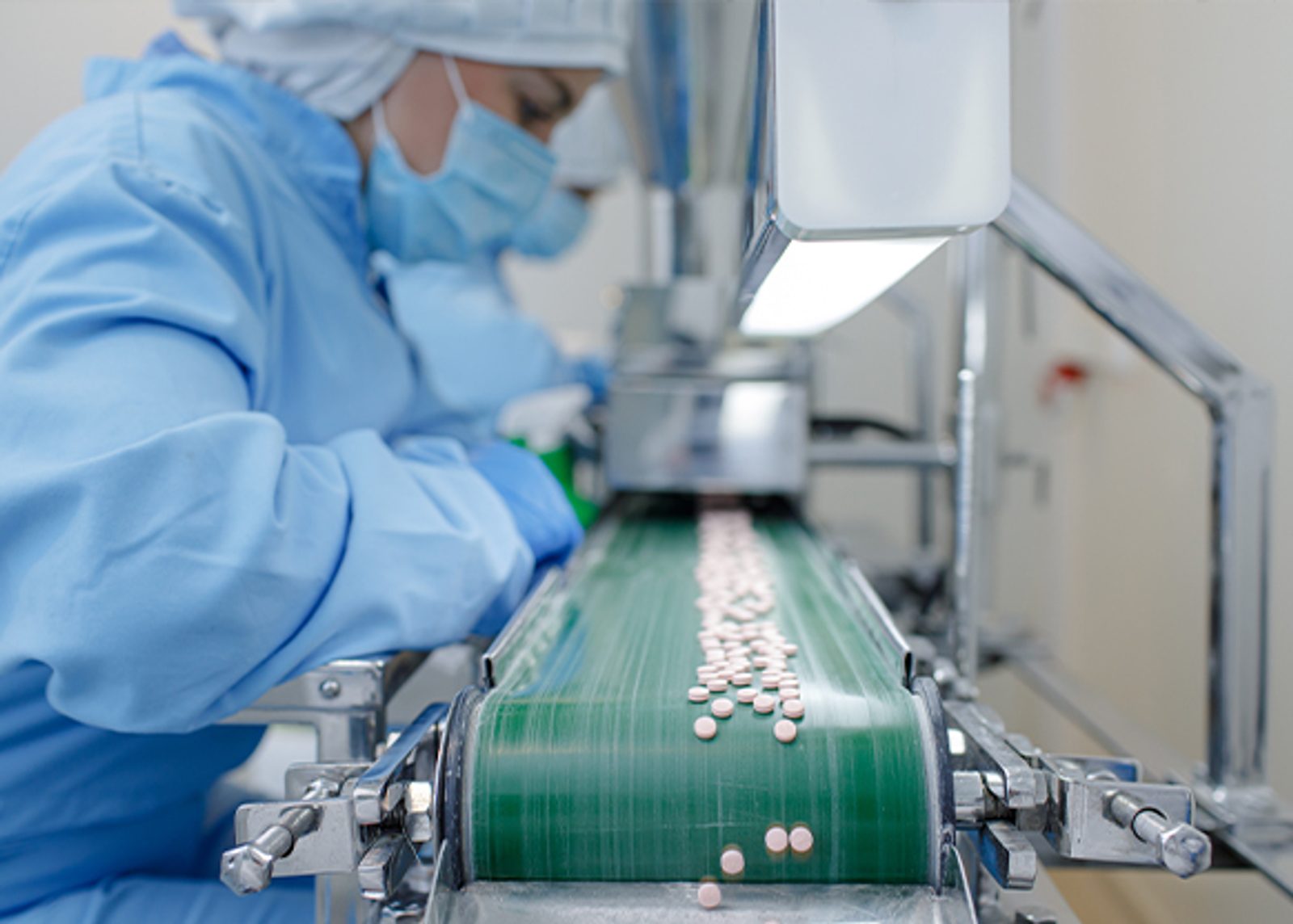
From five hundred grams to five hundred kilograms, at a single site.
Development trials, pilot batches and commercial manufacturing are run on the same technology. Because there is no need to change site during scale-up, process knowledge and validation history are not interrupted.
For formulations suitable for direct compression, the limit that determines batch size is blending capacity; for these products there is no intermediate operation between blending and tablet compression. For products that require granulation, a single granulation batch is limited to 100 kilograms.
Granulation and drying
Granulation is the step that determines the outcome of solid dosage manufacturing. Having fluid bed and high shear granulation at the same site means the method required by the formulation can be selected according to the needs of the product rather than the constraints of the equipment.
Fluid bed granulation and coating
- Batch range
- 500 g – 100 kg
- Spraying
- Top spray, tangential (side) spray and bottom spray
- Granulation by top spray: produces granules with high flowability and compressibility.
- Pelletisation and layering by tangential spray: the active substance is loaded onto the core in stages.
- Pellet and particle coating by bottom spray: prolonged-release and gastro-resistant films are applied by this method.
Having all three spray configurations in a single unit allows the steps from granulation through to functional coating to be carried out without transferring the product.
High shear granulation
- Batch range
- 500 g – 80 kg
- Use
- Wet granulation, dense granule structure
- Short process time and high density granules; reduces tablet volume in high dose formulations.
- Requires less binder solution than fluid bed granulation.
Powder blending
Blending is carried out in the bin (IBC). There is no blade or agitator inside the bin; the bin is rotated about its own axis and the powder is distributed and blended with every revolution. Because the energy input is low, granules and pellets can be blended without their structure being damaged.
In-bin (IBC) blending
- Batch range
- 5 kg – 500 kg
- Method
- Tumble (diffusion) blending
- Low shear forces that do not damage particle structure when granules, pellets and lubricant are added.
- Blending time and rotation speed are defined per recipe and placed on record.
- The batch identity carried on the bin travels with the product.
Blending is a matter not of time alone but of a number of revolutions. Under-blending can produce a non-uniform blend, while over-blending can cause segregation in components of differing density; the correct range for each product is established by validation.
Verification of blend uniformity
- Samples are taken from defined positions in the blending bin.
- The content of the active substance is measured in our own chromatography laboratory.
- Results are assessed against product-specific acceptance criteria and entered in the batch record.
- Blend hold time is studied separately for each product; commercial manufacturing does not begin until the blend has been shown to retain its uniformity until compression or filling is complete.
The site that performs the blending is also the site that demonstrates its uniformity; because the sample is not sent to another laboratory, the result is available on the same day.
Tablet compression and coating
The turret of our tablet press is of interchangeable design. The D-type turret in use allows large diameter and high dose tablets, while the B-type turret allows higher output at small diameters; product changeovers are also shortened by this design. On the coating side, functional coatings that determine release behaviour can be applied alongside protective film coating.
Rotary tablet press
- Turret in use
- D-type punch and die set
- Turret change
- Interchangeable with a B-type turret
- Compression force
- 100 kN pre-compression, 100 kN main compression
- Tablet thickness
- Up to 8.5 mm
- Large tablet compression: with the D-type turret in use, round tablets up to Ø25 millimetres and oblong tablets up to 25 millimetres can be compressed. This is the tooling size required for high dose formulations.
- High output at small diameters: when the turret is changed to the B-type, the number of stations increases and hourly output rises for small diameter tablets. The configuration required by the product is selected.
- Compatibility with European (EU) and American (TSM) standard tooling; the punch and die set already held by our partner can be used directly, with no need to invest in new tooling.
- Monitoring of weight deviation throughout the process by automatic weight control.
Our press is of single-sided design; bilayer tablet manufacturing is outside our scope.
Film and functional coating
- Batch range
- 500 g – 80 kg
- Protective and cosmetic film coating.
- Gastro-resistant (enteric) coating to protect the active substance from gastric acid.
- Controlled release by means of prolonged-release coating.
- Moisture barrier and taste-masking coatings.
What is decisive in functional coating is the reproducibility of film thickness. Spray rate, atomisation pressure, product temperature and weight gain are monitored throughout the process and placed on record.
Capsule filling
Our capsule filling line is not limited to powder filling. The ability to combine pellets, beadlets and mini-tablets in a single capsule makes it possible to present components with different release rates, or active substances that are incompatible with one another, in the same capsule.
Hard capsule filling line
- Capsule size
- #00 – #4 (#000 and #5 optional)
- Dosing
- Dosing disc and stepwise compression (tamping) system
- Powder filling.
- Pellet and beadlet filling.
- Combination of powder, pellets and mini-tablets in the same capsule.
- Continuous monitoring of fill weight by automatic weight control and sample weighing.
- Automatic rejection of unseparated capsules on the line.
Sachet filling
Our sachet line runs horizontally: the sachet is filled while it stands still with its mouth open, and is sealed afterwards. Because the powder does not fall freely, the sealing area stays clean; four-side sealing provides a moisture barrier.
Horizontal sachet filling line
- Dosing
- Servo-driven auger system
- Pack
- Four-side sealed sachet
- Because auger dosing forces the powder through, it also works with non-free-flowing and low density powders; unlike cup dosing, flowability is not a precondition.
- The servo motor positions the auger in increments of less than a full turn and reverses at the end of filling to cut off tailing flow.
- Because there is no clutch and brake assembly subject to wear, the dose does not drift over time; at product changeover the setting is made through the recipe rather than mechanically, and it enters the record.
- Filling of granules, powders and granules for oral suspension.
Fragile pellets and whole tablets are outside the scope of this method; the auger system damages such products.
Verification of fill weight
- Sample weighing on a calibrated balance at defined intervals within the shift.
- Statistical monitoring of the mean and of the dispersion trend.
- Pharmacopoeial uniformity of mass test at the end of the batch.
- Monitoring of sealing temperature, pressure and dwell time from the recipe.
Our filling band is kept clearly below the limits the pharmacopoeia defines for uniformity of mass; the band applicable to each product is established by line qualification.
Packaging lines
We have two packaging lines, one for bottles and one for blisters. On both lines, control is carried out on the line and continuously rather than by sampling; packaging is not merely a closing operation but the final quality control step.
Bottle filling line
- Accurate filling of tablets and capsules by count using a multiple counting system.
- Bottle cleaning with ionised air: removes the static charge before filling and clears particles from inside the bottle.
- Desiccant insertion: keeping the moisture inside the pack under control for moisture-sensitive formulations.
- Capping and torque control: verification that the closing torque is within the defined range.
Blister line and inspection system
- Control of empty pockets, breakage and misplacement by a camera-based inspection system.
- Every blister checked on the line, without sampling.
- Automatic rejection of defective product.
Data integrity and traceability
In contract manufacturing, what our partner buys is not only the product but the record that demonstrates how that product was made. Our equipment train is configured to meet electronic record and electronic signature requirements.
Electronic records and audit trail
- User identity and role-based authorisation.
- An unalterable, time-stamped audit trail.
- For electronic signatures, the signatory, the date and the meaning of the signature are recorded together.
- Verification of systems within the scope of a qualification and validation programme.
Our record infrastructure is based on 21 CFR Part 11 and on the electronic record requirements of the GMP guideline; ALCOA+ data integrity principles are applied.
Turkish Pharmaceutical Track and Trace System (İTS)
- Identification of every sales unit by product number, expiry date, batch number and unique serial number.
- Verification of the printed code and cancellation of incorrect codes.
- Notifications carried out under an audit trail.
Quality control laboratory
Our analytical infrastructure has the capacity to cover method development, method validation and stability studies as well as the routine control of the product manufactured. Ten chromatography systems mean that, in a multi-product contract manufacturing programme, routine analysis does not hold up development work.
Instrument park
Assay of the active substance, impurity profile, method validation and stability analyses.
Residual solvent and volatile impurity analyses.
Elemental impurity and heavy metal determination.
Cleaning validation and water system control.
Determination of the release profile; evidence that the functional coating achieves the intended profile.
Determination of microbial load and environmental monitoring under Grade D conditions.
Clean areas
- Manufacturing and filling areas are operated under Grade D conditions.
- Particulate and microbial load are monitored regularly; results are placed on record.
- Personnel and material entry and exit are managed through separate access routes.
Storage and distribution
Within our site there is a pharmaceutical warehouse licensed by the Ministry of Health of the Republic of Türkiye. Products requiring a cold chain are stored between 2 and 8 °C under continuous recording.
Cold chain and licensed warehouse
- Temperature range
- 2–8 °C cold chain area
- Monitoring
- Continuous temperature recording and alarm system
- Licence
- Pharmaceutical warehouse approved by the Turkish Ministry of Health
- Storage areas verified by temperature mapping studies.
- Segregation of quarantine, released and returned product areas.
- Shipment in accordance with the principles of Good Distribution Practice.
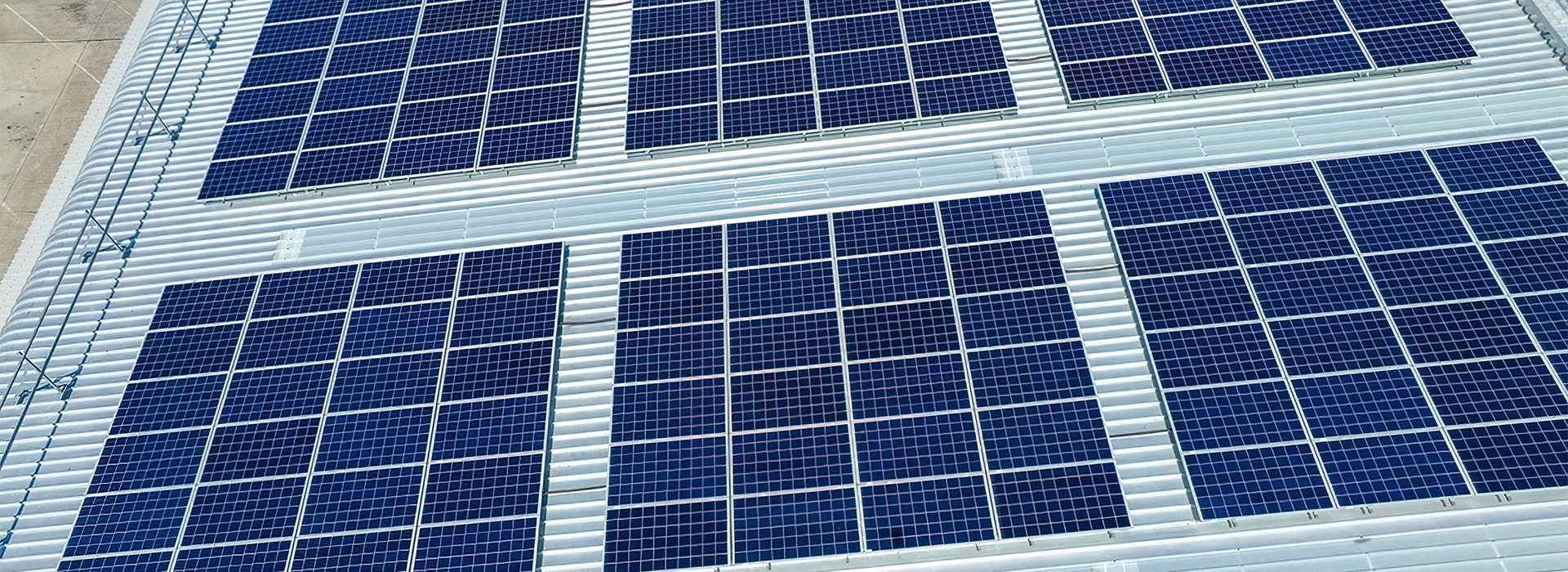
The most energy-intensive steps of production run on the sunlight on our roof.
Fluid bed granulation and coating are the steps of solid dosage manufacturing that consume the most energy; heating large volumes of air and removing moisture require continuous energy. About half of the electricity our site requires is supplied by the solar power plant on our roof. This is reflected directly in the Scope 3 (indirect) emissions accounting of the partners for whom we manufacture under contract.